You Don't Have to Know How to Draw to Make a Portrait Quilt
Nov 03, 2026There's a photo you've thought about turning into a quilt.
Maybe it's your grandmother, young, in a dress you can still describe. Maybe it's the dog who's been under your sewing table for twelve years. Maybe it's a peony from your garden, or the view from the back porch at the lake. You've looked at it and thought, I'd love to make that. And then, almost in the same breath: But I can't draw. I'm not that kind of artist.
So you set it aside and went back to a pattern.
I want to talk you out of that, because this month in Meander we're exploring one of our members' very favorite techniques: portrait quilting. And the thing I most want you to know is that portrait quilts are not drawn. They're built.
What a portrait quilt actually is
A portrait quilt is any quilt made from a photograph that has depth and dimension to it. A face is the obvious one, but it doesn't have to be a face. It can be an animal, a flower, a landscape. If the photo has light falling on one side and shadow on the other, if it looks three-dimensional when you look at it, it's a candidate.
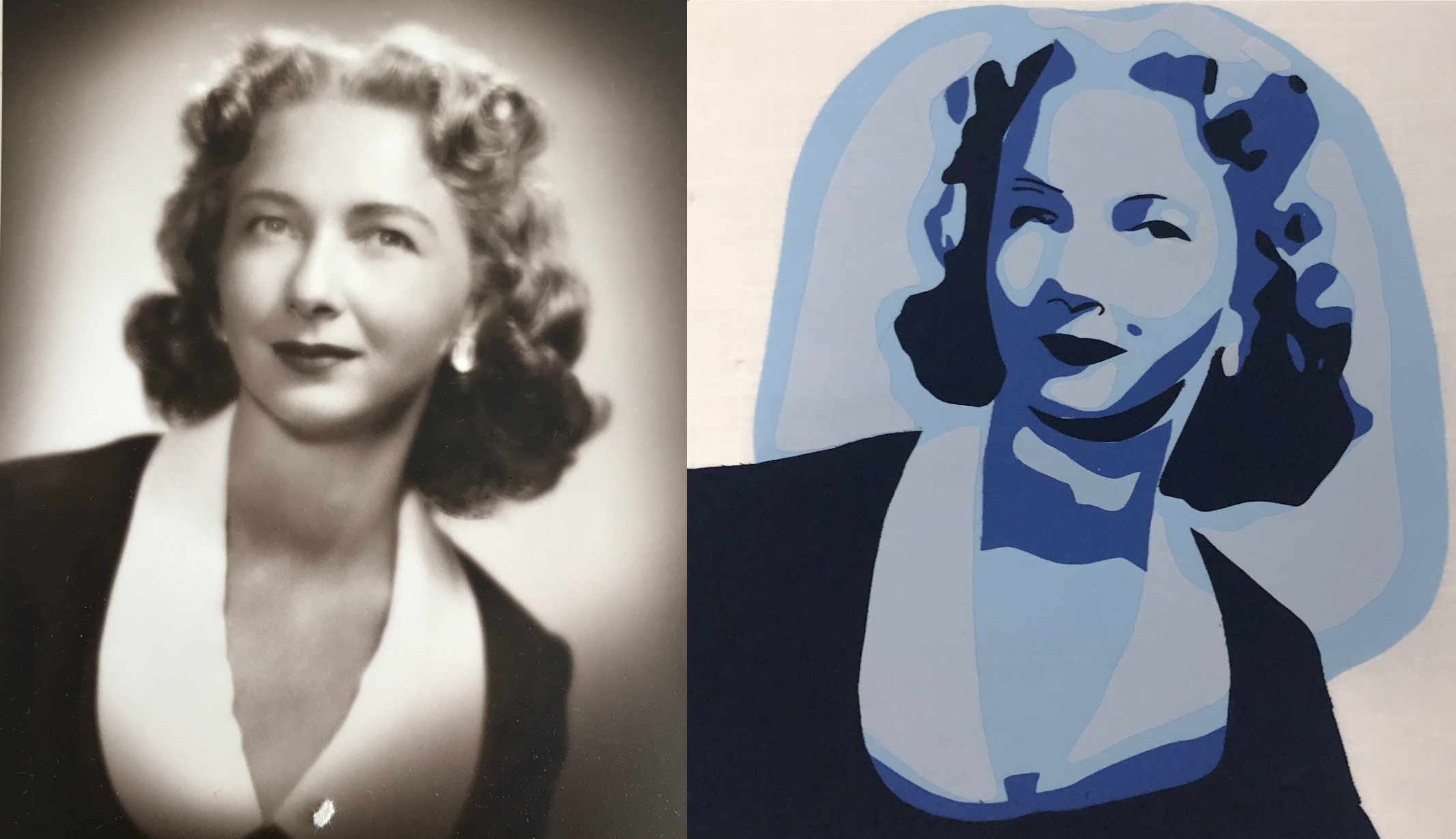
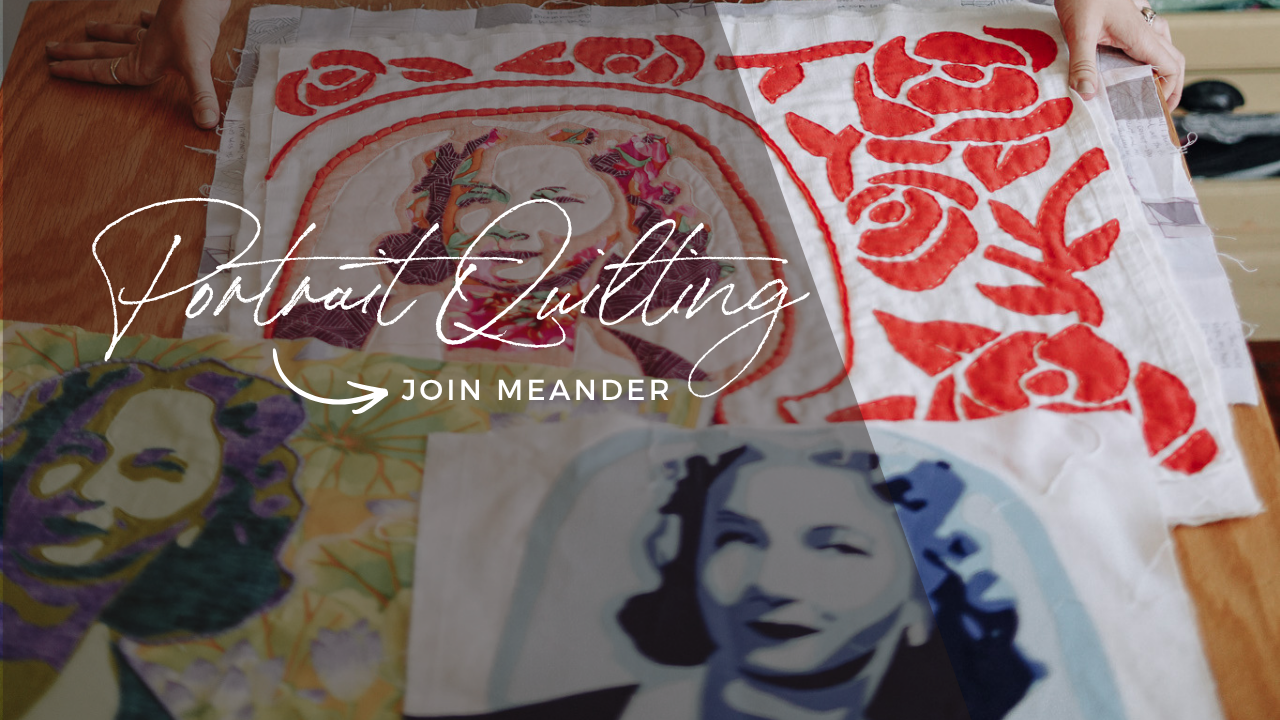
This is my grandmother. I made this from a single photograph, and I didn't draw a line of it freehand.
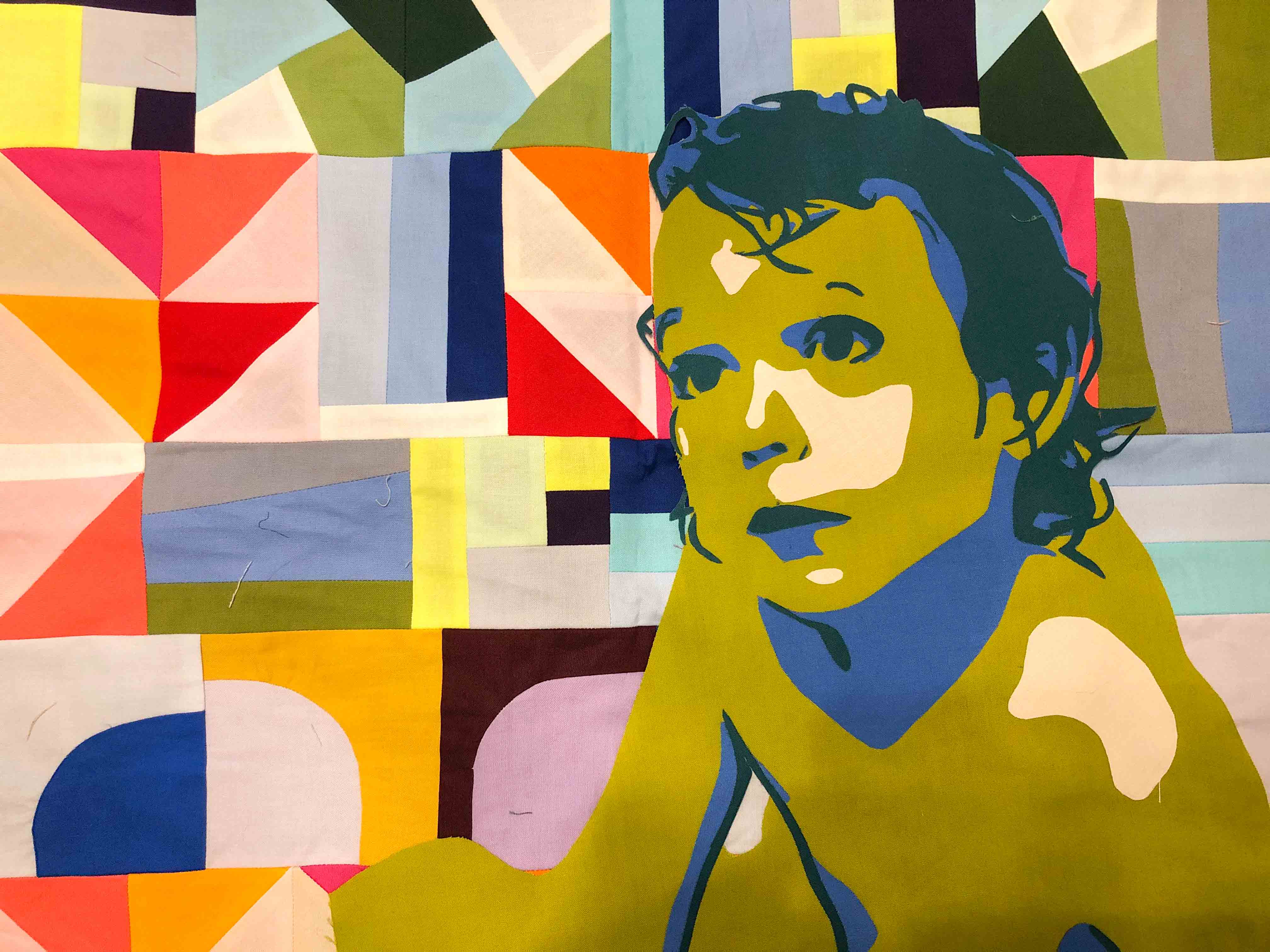
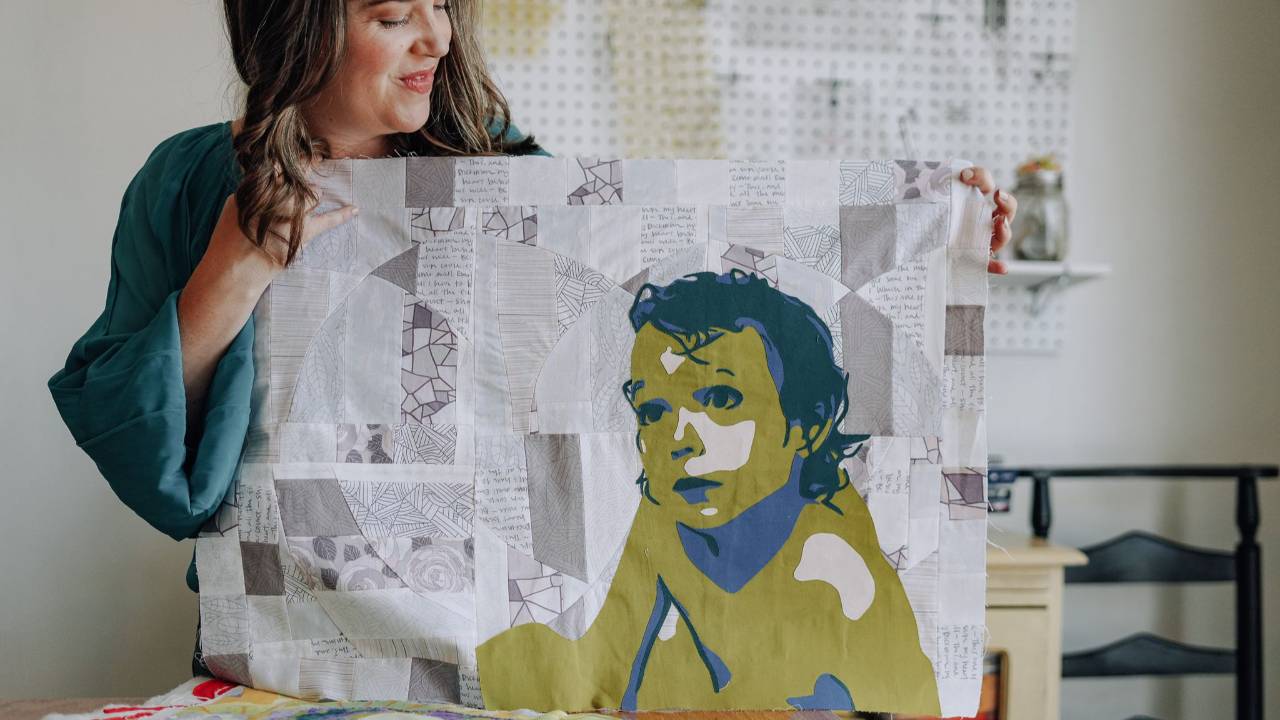
This is my son, with the portrait placed on a pieced background. Same process.
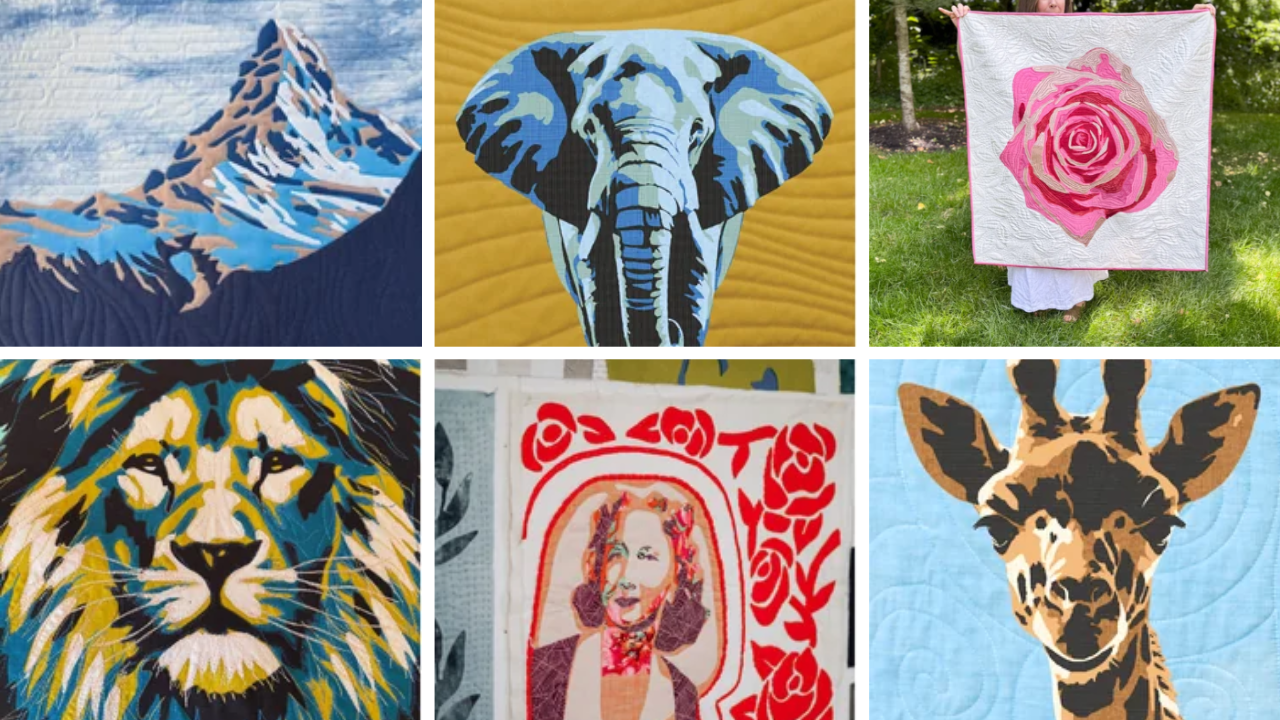
A rose. A lion. A landscape. Every one of these came from a photo and used the exact same method.
Why most portrait quilting feels out of reach
If you've seen portrait quilts online and thought "I could never," I understand completely. A lot of portrait quilting methods really do ask you to have an illustrator's eye. You're expected to look at a face and decide where the shadows go, which shapes to simplify, how to make a nose read as a nose. That's a lot to ask of anyone, and it's a hard no for most of us.
Here's the thing, though. The reason a photo looks three-dimensional has nothing to do with drawing. It comes down to light and dark. Where the light hits, the color is lighter. Where it falls away, the color is darker. That's it. That's what your eye is reading when it sees a face or a flower and understands its shape.
My whole method is built on that one idea, something I call value layers. Instead of trying to see a face and draw it, you work with a handful of fabrics from light to dark, and you let the layers do the work of creating the depth. You don't have to decide where the shadows go. You don't have to know what to simplify. You don't have to be good at Photoshop, and you don't need any special software. You follow a process, and the dimension appears.
I'm not going to teach the process here, but I will tell you this: when I show it to people, the most common reaction is a little bit of disbelief. That's it? That's it.
The block we're making this month
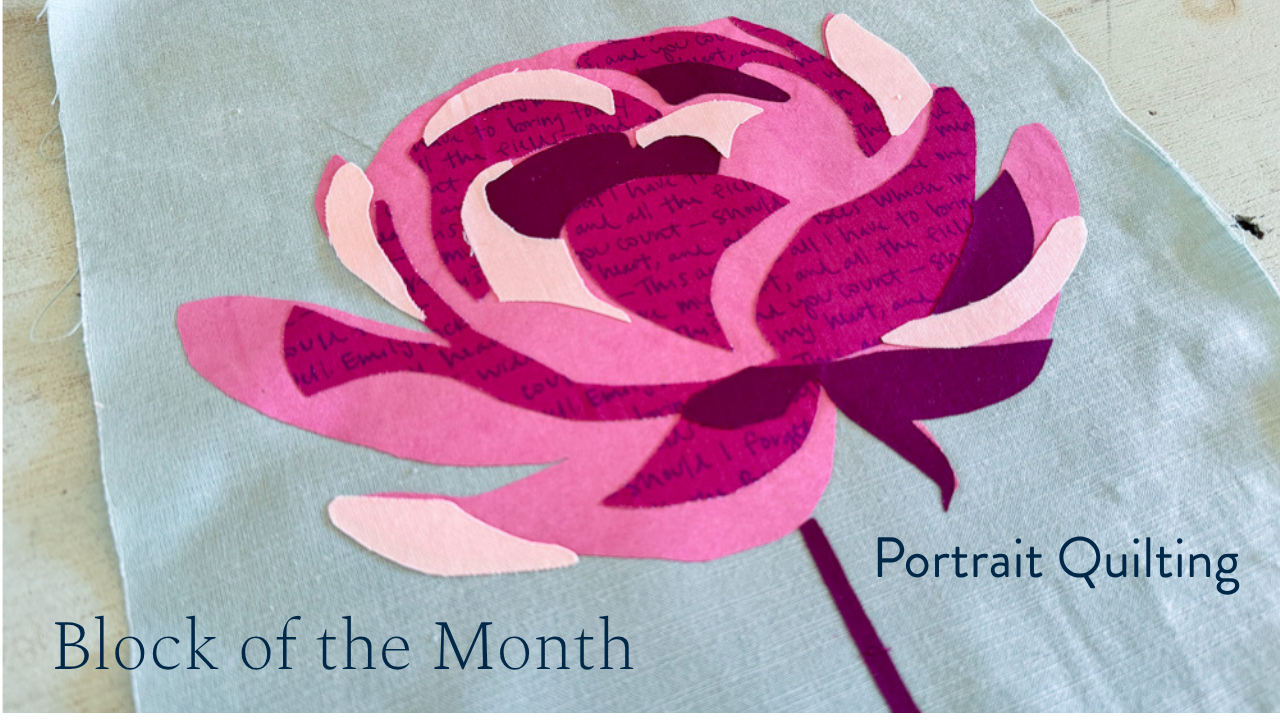
This November, our Meander Garden block of the month is a peony, done as a portrait quilt. It's a 12½-inch block, and it's the perfect first portrait, because a flower is forgiving. If a petal lands a hair off, it's still a peony. If an eyebrow lands a hair off, well. We'll get to eyebrows later.
Most members will finish it on a Saturday afternoon or across a couple of evenings. And once you've made it, you'll know the process for any portrait quilt you want to make. The peony is the lesson. The photo of your grandmother is what you do with it.
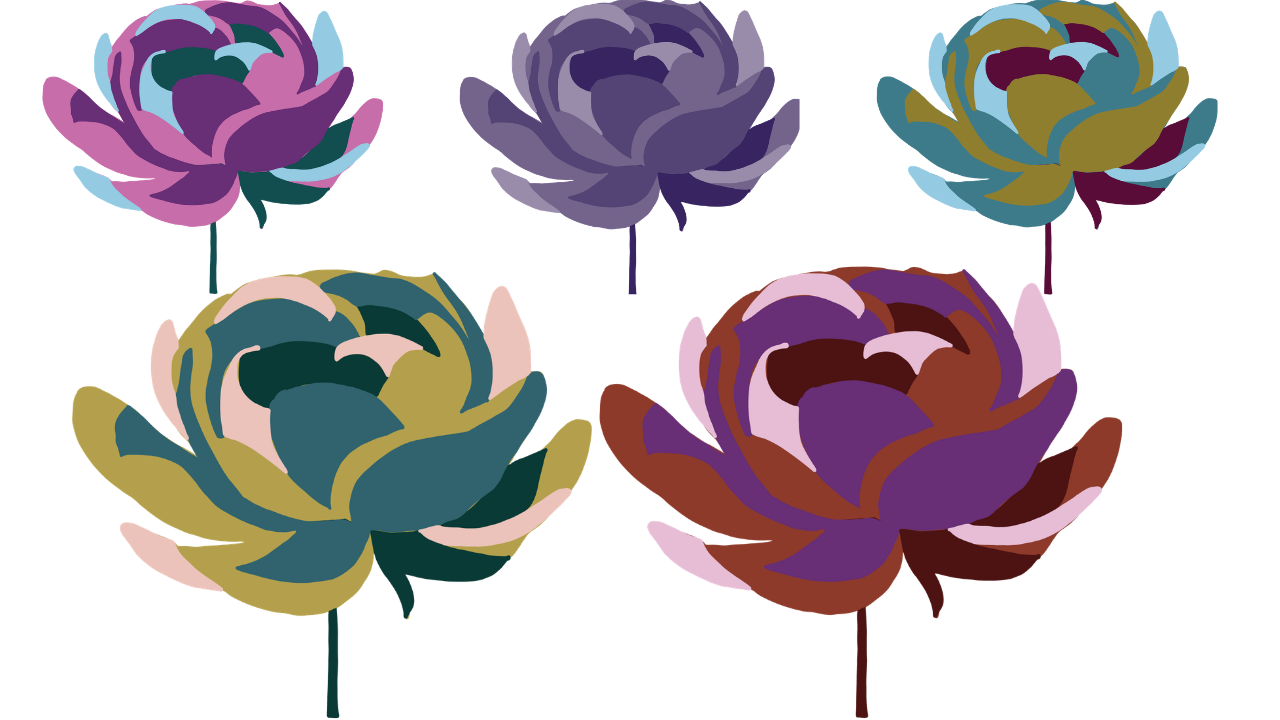
Yours doesn't have to be pink, either. We have a coloring sheet so you can play with palettes before you cut. Some members will make a realistic peony. Some will make one in four shades of teal. There's no right or wrong here.
Two things you can do today, even if you never join us
Pick a photo. Go through your phone or that shoebox and look for a picture with real light and shadow in it, where one side of the face or the flower is clearly brighter than the other. Flat, evenly lit photos are harder to translate. Dramatic light is your friend. Set that photo aside. You'll want it.
Learn to trust fresh eyes. When you build an image in layers, there's a moment where you've been staring at it so long that it stops looking like anything. It just looks like shapes. Every portrait quilter knows this moment. The fix is to walk away, get a glass of water, come back ten minutes later and look from across the room. There it is. There's the flower. There's her face. Keep this one in your pocket for any project where you've lost perspective.
If you've been telling yourself you can't
I'll say it plainly. You don't need to be able to draw. You don't need to be good with technology. You don't need to think of yourself as an artist. If you can trace a line and use an iron, you can make a portrait quilt, and I'd love to show you how.
Portrait quilting is our technique of the month in Meander, my membership for quilters who want to explore new techniques and find their own creative voice. The full peony tutorial, the printable guide, the coloring sheet, and a live Q&A are all waiting inside, along with everything else we've made this year.
Meander is $24 a month, and you can cancel anytime. You can learn this entire technique for $24. It's probably the least expensive workshop you'll ever take, and it comes with a whole studio full of people making peonies alongside you.
Go find your photo.